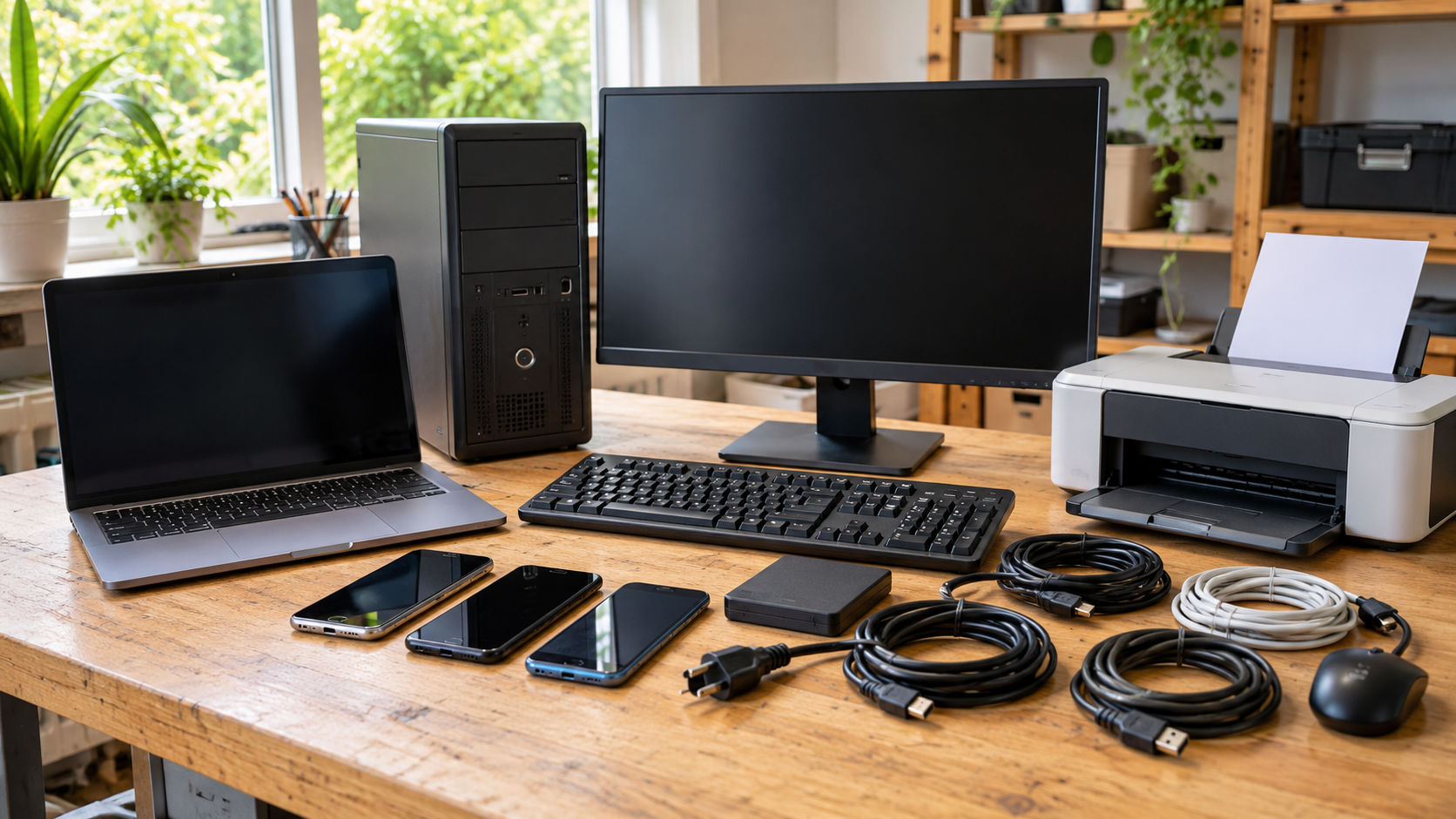
What is e-waste? In simple words, e-waste is electronic equipment that its owner no longer wants or can use. That covers a broken phone in a drawer as well as a pallet of retired office computers. Because electronics contain valuable materials, some hazardous components and often private data, they need more thought than ordinary trash. This guide explains what counts as e-waste, why it matters and what your options are.
What Is E-Waste, Exactly?
E-waste is short for electronic waste. There is no single definition used everywhere. In everyday use, it means discarded or unwanted devices that run on electricity or batteries. Legal definitions are often narrower and vary by location.
California is a useful example. CalRecycle defines a covered electronic device as a video display with a screen larger than four inches diagonally that the state’s Department of Toxic Substances Control identifies as hazardous waste when discarded. A device can therefore be e-waste in everyday language without falling under one particular state program. E-Waste Laws in California explains that program further.
What Is Considered E-Waste? Common Examples
Items commonly treated as e-waste include:
- desktop computers, laptops and tablets
- CRT, LCD and other monitors and televisions
- cell phones and accessories
- printers, copiers and scanners
- servers, routers and other networking equipment
- hard drives, SSDs and USB drives
- keyboards, cables and chargers
- battery backups and other battery-powered devices
Working equipment you no longer need can also enter this stream, although it may be better suited to reuse than recycling.
Why Is E-Waste a Problem?
Some Components Need Special Handling
Not every part of an electronic device is hazardous, but some parts need care. The U.S. EPA notes that CRT funnel glass generally contains high enough concentrations of lead to be regulated as hazardous waste when discarded. Batteries are another concern: the EPA’s recycling guidance says lithium-ion batteries and devices containing them should not go in household garbage or recycling bins.
Valuable Materials Can Be Lost
The EPA explains that electronics are made from valuable resources, including metals, plastics and glass, all of which require energy to mine and manufacture. It also says recycling can yield materials such as gold, copper, glass and aluminum that can return to the supply chain. Throwing a device away can lose that value.
Old Devices Can Hold Private Data
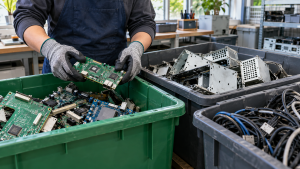
E-waste is also a data issue. Computers, phones, drives and some office equipment can retain files and account information after they stop being used. Recycling a device does not automatically erase it. How to Wipe a Computer Before Recycling explains the difference between deleting and wiping.
E-Waste vs Regular Recycling
Curbside recycling programs are usually designed for materials such as paper, cans and bottles, not for electronics. Electronics generally need a dedicated route through a collection program, a takeback program or an electronics recycler. Check your local program’s rules before putting any device in a bin. For step-by-step options, see E-Waste Disposal.
What Happens to E-Waste?
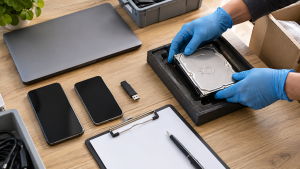
The EPA says preventing waste in the first place is preferable to any waste management option, including recycling. After that, the usual path is:
- Reuse. Working devices can be repaired, redeployed, donated or resold. The EPA notes that reuse extends product life spans.
- Recycling. The EPA describes recycling as including sorting, dismantling, mechanically separating and recovering valuable materials.
The E-Waste Recycling Process walks through these steps in more detail.
What You Can Do With E-Waste
At home: Back up and erase your data, keep batteries safe, consider donating anything that still works, and use a local collection or takeback option.
At work: Inventory equipment, agree how data will be handled, and ask what records you will receive. The EPA recommends using certified electronics recyclers. Commercial Electronics Recycling explains how a business project usually works.
How 3W Computer Helps Businesses With E-Waste
3W Computer works with organizations retiring IT equipment from its base in Upland, California. On its website, 3W Computer lists e-waste recycling with a zero landfill policy, CRT and LCD monitor disposal, logistics and pickup, detailed inventory reporting, equipment remarketing and data destruction services.
Frequently Asked Questions
What is e-waste in simple words?
It is electronic equipment that its owner no longer wants or can use, such as old phones, computers, monitors and cables.
What are examples of e-waste?
Common examples include computers, laptops, monitors, TVs, phones, printers, servers, drives, cables and battery-powered devices.
Is all e-waste hazardous?
Not all of it, but some components are. For example, the EPA notes that CRT funnel glass can contain enough lead to be regulated as hazardous waste. Rules vary by item and location.
Can e-waste go in the recycling bin?
Usually not. Check your local rules, and do not put lithium-ion batteries or devices containing them in household garbage or recycling bins, as the EPA advises.
Can e-waste be reused?
Often, yes. Working equipment can be redeployed, donated or resold after its data has been properly handled.
Now You Know What Is E-Waste. What Comes Next?
Knowing what is e-waste is the first step. The next is to look at what you have, protect any data, and choose reuse or recycling rather than the trash.
To discuss e-waste from your business, contact 3W Computer with your equipment list and location.
Sources
- U.S. EPA, Basic Information About Electronics Stewardship
- U.S. EPA, Electronics Donation and Recycling
- U.S. EPA, Certified Electronics Recyclers
- CalRecycle, Covered Electronic Waste Recycling Program
Name: Win Win World Recycle LLC
Address: 1226 West 9th Street, Upland, CA 91786
Phone: 908-798-6789