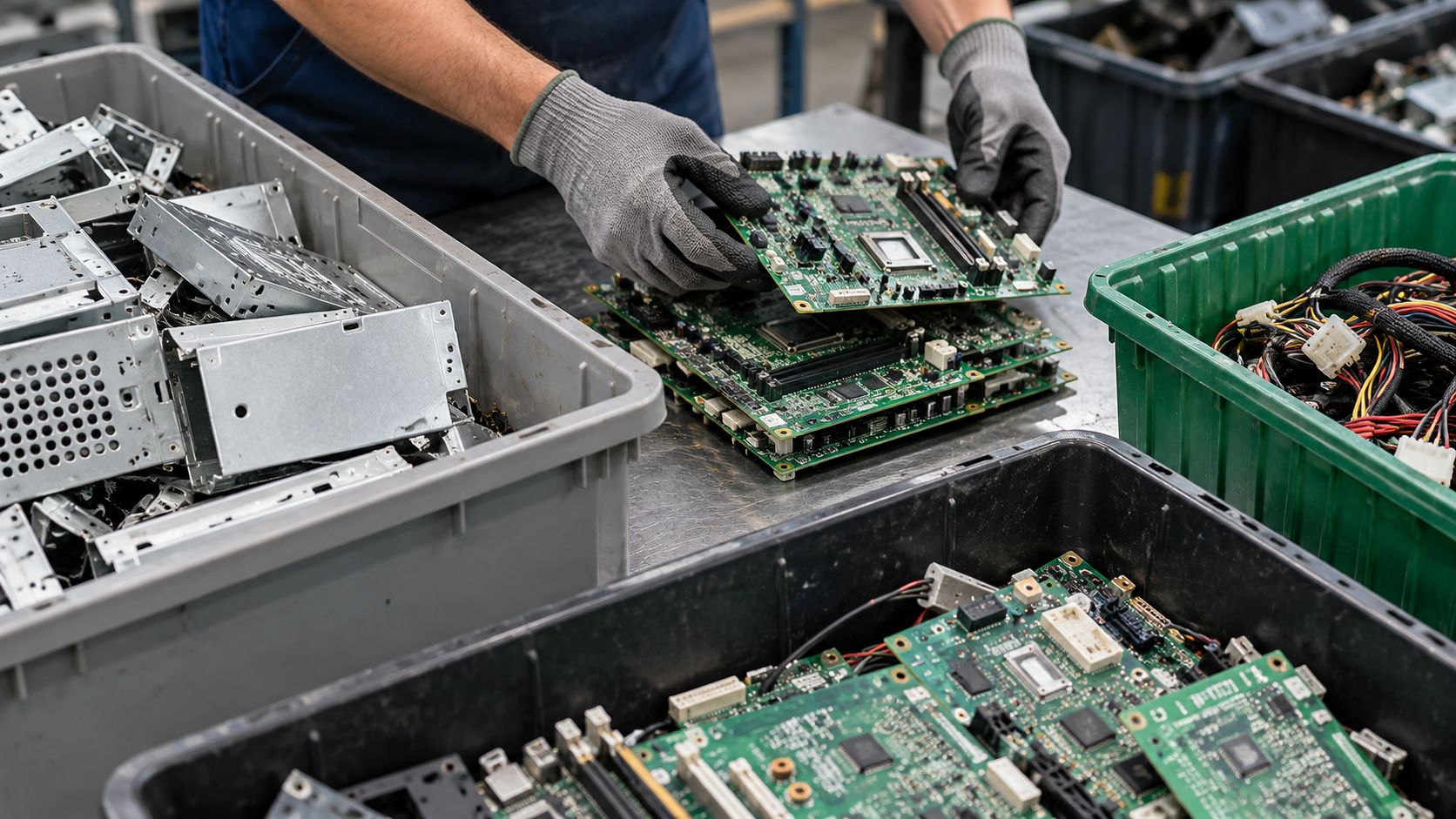
When a business hands over a pallet of old computers, monitors and cables, it can be hard to picture what happens next. The e-waste recycling process is a series of steps that decide whether each item can be reused, which parts need special handling, and which materials can be recovered. Understanding those steps helps you choose a recycler, prepare equipment properly and ask for the right records.
This guide walks through the e-waste recycling process stage by stage, from collection to reporting, and explains what businesses should check along the way.
What Is E-Waste Recycling?
E-waste recycling is the recovery of usable equipment, components and materials from discarded electronics. It covers computers, laptops, monitors, servers, networking equipment, phones, printers and many other devices. According to the U.S. EPA, recycling used electronics can yield materials such as gold, copper, glass and aluminum, and it helps reduce pollution that would be generated while manufacturing new products.
Recycling is not always the first step. In a responsible e-waste recycling process, working equipment is evaluated for reuse before anything is broken down.
Step 1: Collection and Intake
The process begins when equipment leaves your site, through a scheduled pickup, a drop-off or a shipment. At intake, the recycler records what arrived. For businesses, this is the first point where your inventory and the recycler’s records should match, so it helps to send a list ahead of time.
Step 2: Sorting and Inventory
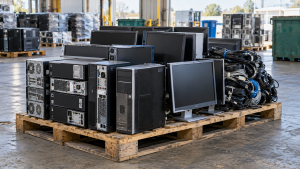
Items are sorted by type and condition: working computers, broken devices, monitors, batteries, cables and so on. Data-bearing devices are identified and tracked separately, often by serial number. Accurate sorting at this stage shapes every later decision in the e-waste recycling process.
Step 3: Data Handling for Data-Bearing Devices
Laptops, desktops, servers, phones, tablets and loose drives can contain business data. Before any reuse or dismantling, those devices need an agreed data handling method, such as software wiping for equipment that will be reused or physical destruction for drives that will not.
Recycling alone does not remove data, so this step should be defined before pickup. Data Wiping vs Hard Drive Shredding: A Business Guide compares the main options.
Step 4: Testing, Reuse and Refurbishment
Working equipment is tested to see whether it can be reused or resold. Extending the life of a device keeps it in use longer and can return some value to the business that retired it. IT Asset Recovery: 7 Essential Tips for Better Returns explains how recovery value is assessed.
Step 5: Dismantling and Hazardous Component Removal
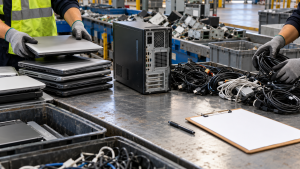
Devices that cannot be reused are taken apart. Components that need special handling are separated first:
- Batteries, which can be a fire risk if damaged or crushed
- CRT glass, which the EPA notes generally contains enough lead in the funnel glass to be regulated as hazardous waste
- Circuit boards, which contain recoverable metals and are processed separately
- Plastics and metal housings, which are sorted by material type
Usable parts, such as memory or drives approved for reuse, may be harvested at this stage. Computer Parts Recycling: Old RAM, GPUs and Motherboards covers what happens to individual components.
Step 6: Material Recovery
Sorted materials go to downstream processors that recover metals, glass and plastics for use in new products. This is the stage most people imagine when they hear “recycling,” but in a well-run e-waste recycling process it comes after reuse and careful separation.
Step 7: Downstream Tracking and Certification
Much of the material recovery happens at specialized downstream facilities. That is why certification matters. The EPA recommends using certified electronics recyclers and identifies two accredited standards, R2 and e-Stewards. EPA states that certified recyclers have demonstrated through audits and other means that they continually meet specific high environmental standards. Ask any recycler how it selects and monitors its downstream partners.
Step 8: Reporting
At the end of the e-waste recycling process, businesses should receive records that match what they handed over. Depending on the job, that can include an itemized inventory, data destruction certificates tied to serial numbers, and recycling or resale records. Certificate of Data Destruction: A Business Guide explains what a data destruction record should contain.
How Businesses Should Prepare for E-Waste Recycling
Before the e-waste recycling process begins, prepare your equipment:
- List the equipment by type and approximate quantity.
- Mark devices that contain data and agree on how they will be handled.
- Separate batteries, damaged devices and CRT monitors.
- Remove items that do not belong, such as general trash or non-electronic office furniture.
- Confirm what records you will receive and when.
Is e-waste collection free? Sometimes, but not always. Cost depends on the equipment mix, quantity, location, data handling and any resale value, so ask for a quote based on your list.
How 3W Computer Approaches E-Waste Recycling
3W Computer works with businesses retiring electronics and IT equipment. On its website, 3W Computer describes responsible disposal of electronics with a zero landfill policy, lists CRT and LCD monitor disposal, and offers data destruction services such as hard drive shredding, software wiping and a certificate of destruction. For larger projects, 3W Computer lists logistics and pickup, detailed inventory reporting and equipment remarketing.
Frequently Asked Questions
How does the e-waste recycling process work?
Equipment is collected, sorted and inventoried. Data-bearing devices are sanitized or destroyed, working equipment is evaluated for reuse, and the rest is dismantled so hazardous components are separated and materials can be recovered.
What materials are recovered from e-waste?
The EPA lists materials such as gold, copper, glass and aluminum among those recovered from used electronics. Plastics and other metals are also sorted for recovery.
Does recycling a computer erase its data?
No. Data handling is a separate step. Make sure data-bearing devices have an agreed sanitization or destruction method before they leave your site.
Is e-waste collection free for businesses?
It depends on the equipment, quantity, location and services required. Some equipment has resale value that can offset costs, while other items cost money to process.
What certifications should an e-waste recycler have?
The EPA recommends certified electronics recyclers and names R2 and e-Stewards as accredited standards. Ask any provider which certifications it holds and how downstream partners are managed.
Choose a Transparent E-Waste Recycling Process
A good e-waste recycling process is one you can follow from start to finish: clear intake, defined data handling, reuse before recycling where practical, careful separation of hazardous parts and records that match your inventory. Asking about each step before pickup makes it easier to choose the right partner.
To discuss the e-waste recycling process for your retired equipment, contact 3W Computer with your equipment list and pickup location.
Sources
- U.S. EPA, Electronics Basic Information
- U.S. EPA, Certified Electronics Recyclers
Name: Win Win World Recycle LLC
Address: 1226 West 9th Street, Upland, CA 91786
Phone: 908-798-6789