Batteries, fluorescent lamps and old thermostats are common in almost every workplace, and many of them are hazardous when thrown away. Rather than making every business follow the full hazardous waste rules for these everyday items, U.S. regulations created a simpler system called universal waste. This guide explains what universal waste is, what it includes, how it differs from hazardous waste, and why electronics are treated as universal waste in some states.
This article is general information. Check with your state environmental agency for the rules that apply to you.
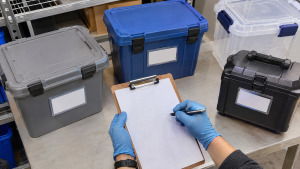
What Is Universal Waste?
According to the U.S. EPA, universal waste regulations streamline the hazardous waste management standards for certain categories of hazardous waste that are commonly generated by a wide variety of establishments.
The EPA says the streamlined regulations:
- promote the collection and recycling of universal waste
- ease the regulatory burden on retail stores and other generators that collect these wastes, and on transporters
- encourage municipal and commercial programs that reduce the amount of these wastes going to landfills or combustors
In short, these materials are still hazardous waste, but they can be managed under simpler rules designed to make recycling easier.
What Is Considered Universal Waste?
The federal regulations are in 40 CFR part 273. The EPA lists five federal categories:
- Batteries
- Pesticides
- Mercury-containing equipment
- Lamps
- Aerosol cans
The EPA notes that lamps were added in 1999, mercury-containing equipment in 2005 and aerosol cans in 2019. The EPA has also announced plans to propose new rules for end-of-life solar panels and lithium batteries.
Universal Waste vs Hazardous Waste
It is a subset of hazardous waste with lighter requirements. According to the EPA, materials managed this way:
- can generally be stored for up to a year
- are not required to be shipped with a manifest or by a hazardous waste transporter
- do not count toward a generator’s hazardous waste category once they are subject to these rules
The rules still require businesses to manage these materials in a way that prevents releases to the environment. The EPA lists a labeling requirement, a requirement to respond to releases, and a requirement for the waste to ultimately go to a facility permitted or designated to receive hazardous waste, such as a hazardous waste recycler.
Who Handles Universal Waste?
The EPA describes four types of regulated participants:
| Participant | Description |
|---|---|
| Small quantity handler | Accumulates less than 5,000 kg |
| Large quantity handler | Accumulates 5,000 kg or more |
| Transporter | Moves the waste |
| Destination facility | Receives the waste for treatment, disposal or recycling |
Requirements differ for small and large quantity handlers and for each waste type.
Is E-Waste Universal Waste?
Not under the five federal categories, but in some states, yes. The EPA explains that states may add their own categories. In its list of materials classified this way in some states, the EPA shows electronics for Arkansas, California, Colorado, Connecticut, Hawaii, Louisiana, Michigan, Nebraska, New Jersey and Rhode Island, and cathode ray tubes for Maine, New Hampshire and Rhode Island. The EPA notes this list is not comprehensive.
States may also adopt only some of the federal categories. If a state does not adopt a category and the waste meets the definition of hazardous waste, it must be managed under that state’s hazardous waste rules.
California and Universal Waste
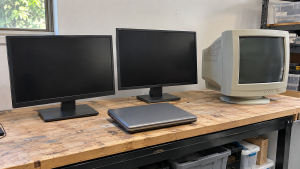
California appears on the EPA’s list for both electronics and solar panels. CalRecycle also explains that DTSC identifies covered electronic devices, such as many TVs and monitors, as hazardous waste when discarded. E-Waste Laws in California explains the state’s program, including the trash ban.
How Businesses Can Manage Universal Waste
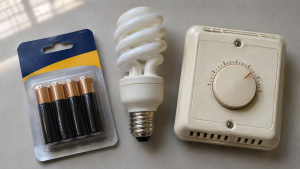
- Identify what you have. Batteries, lamps, mercury-containing devices and, depending on your state, electronics.
- Check your state’s list. Your state may add or omit categories.
- Label and store it properly. Keep containers in good condition and labeled as your state requires.
- Track accumulation time. Know how long items have been stored.
- Use appropriate destinations. Send items to recyclers or facilities authorized to receive them.
- Keep records of what left and where it went.
For electronics specifically, remember that many devices also hold data. Handle the data before equipment leaves your control. E-Waste Disposal covers both sides, and CRT Monitor Disposal explains why tube displays need special care.
How 3W Computer Can Help
3W Computer works with businesses from its base in Upland, California. On its website, 3W Computer lists e-waste recycling with compliance with California regulations, CRT and LCD monitor disposal, logistics and pickup, and data destruction services. Contact 3W Computer to discuss the electronics your business needs to retire.
Frequently Asked Questions
What is universal waste in simple terms?
It is a group of common hazardous wastes, such as batteries and lamps, that businesses can manage under simpler rules designed to encourage recycling.
What are the five types of universal waste?
Under federal rules: batteries, pesticides, mercury-containing equipment, lamps and aerosol cans.
Is universal waste the same as hazardous waste?
It is a category of hazardous waste with streamlined requirements.
Are computers universal waste?
Not under the federal categories, but several states, including California, classify electronics as universal waste.
How long can universal waste be stored?
The EPA says these materials can generally be stored for a year. Check your state’s rules for details.
Know Your Universal Waste Before It Piles Up
These rules make it easier to recycle common hazardous items, but they still require care. Know which categories apply in your state, store and label items properly, use authorized destinations and keep records.
To discuss recycling of your business electronics, contact 3W Computer.
Sources
- U.S. EPA, Universal Waste
- CalRecycle, Covered Electronic Waste Recycling Program
Name: Win Win World Recycle LLC
Address: 1226 West 9th Street, Upland, CA 91786
Phone: 908-798-6789