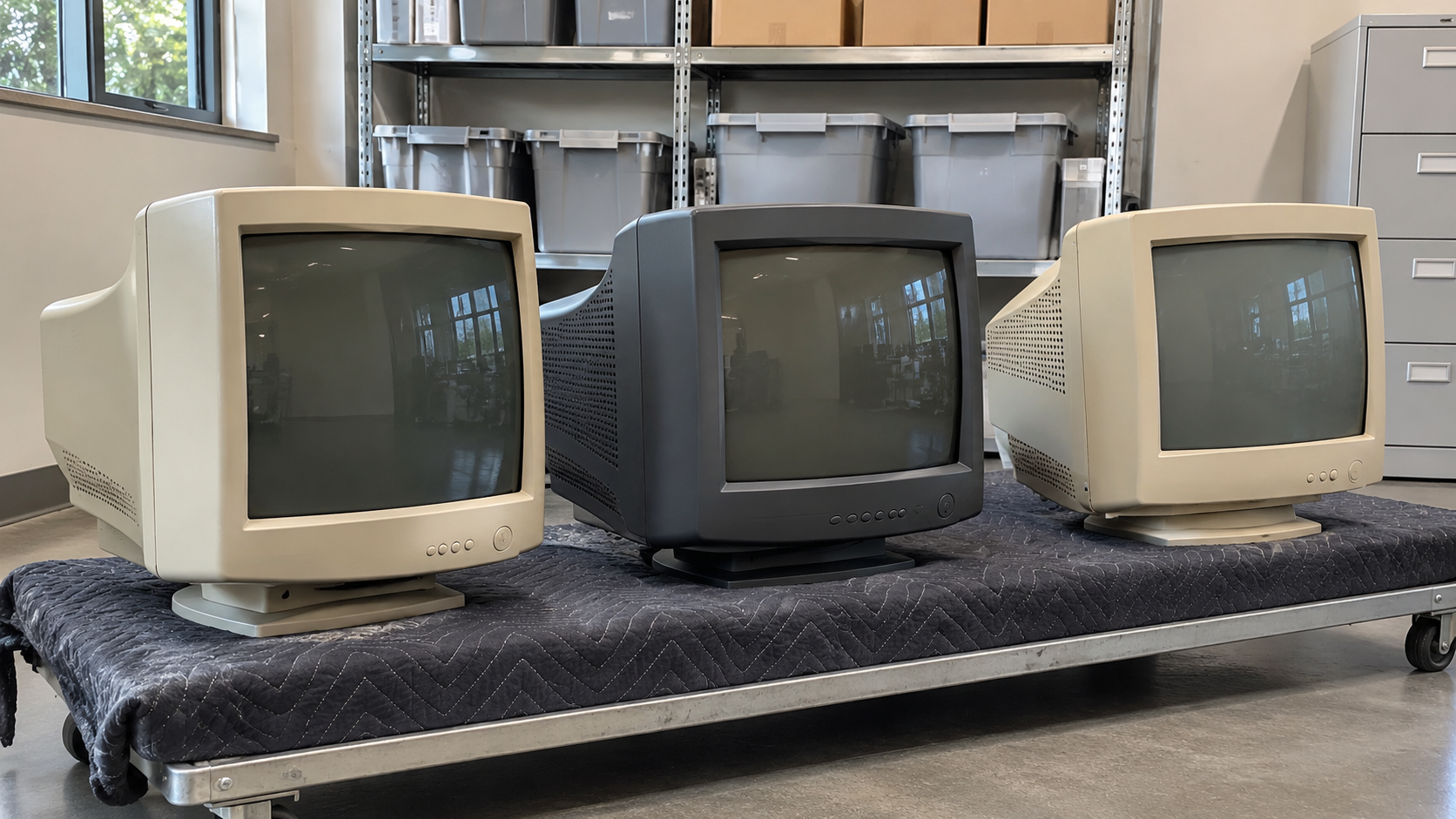
Before flat screens, computer monitors and TVs used cathode ray tubes: the heavy, deep glass displays many offices still have stacked in a storeroom. They no longer have much use, but they cannot simply go in the trash. CRT monitor disposal needs more care than most electronics because of the lead in the glass. This guide explains why, what the rules say, and how to handle CRTs safely.
What Is a CRT?
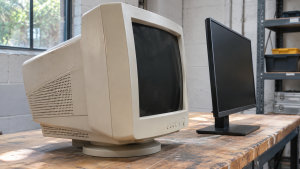
The U.S. EPA describes a cathode ray tube as the glass video display component of an electronic device, usually a television or computer monitor. CRT monitors are easy to recognize: they are deep and heavy compared with flat-panel LCD or LED screens.
Why Is CRT Monitor Disposal a Concern?
Lead in the Funnel Glass
The EPA explains that, due to the presence of lead in the funnel glass, CRTs marked for disposal are considered hazardous waste under the Resource Conservation and Recovery Act (RCRA). That is why CRT monitors should not be thrown in the trash.
Glass and Handling Risks
A CRT is a large glass tube. Dropping or breaking one can create broken glass and release leaded glass fragments. Do not open, break or try to dismantle a CRT yourself. Leave dismantling to trained recyclers with the right equipment.
Fewer Recycling Outlets Than Before
The EPA notes that CRT glass was once easily recycled into new CRTs, but demand for new CRTs collapsed in favor of flat panel technologies. Because of rising costs and shifts in CRT glass markets, the EPA says some processors and recyclers have chosen to store CRT glass indefinitely, which increases the risk of mismanagement or abandonment. This makes it worth asking any recycler what happens to CRT glass after collection.
What the Rules Say
Federal Rules
According to the EPA, CRT glass and used CRTs that are recycled or exported for recycling are not considered solid or hazardous waste under RCRA if certain conditions are met. Exporters shipping CRTs to another country for recycling must notify the EPA and receive written consent from the receiving country before shipping. The EPA also notes that state requirements may be more stringent than the federal program.
California Rules
In California, CalRecycle lists CRT televisions and monitors among the covered electronic devices that DTSC identifies as hazardous waste when discarded, for video displays with screens larger than four inches diagonally. E-Waste Laws in California explains the program in more detail.
How to Dispose of a CRT Monitor Safely
- Do not put it in the trash or a curbside bin.
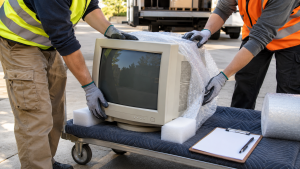
- Keep it intact. Move it carefully, screen facing in, and do not stack heavy items on it.
- Separate broken CRTs. If the glass is cracked or broken, keep it apart and tell the collector before drop-off or pickup.
- Check that the collector accepts CRTs. Not every program or recycler takes them, and some charge for them.
- Ask where the glass goes. Given the EPA’s concerns about stored CRT glass, ask how the recycler manages it.
- Keep a record of how many units were handed over and to whom, especially for a business.
For other monitor types, see Computer Monitor Recycling. Old tube TVs follow the same principles, and TV Recycling covers televisions in general.
Can a CRT Monitor Be Reused?
The EPA encourages repair and reuse as responsible ways to manage CRTs, and says that if reuse or repair is not practical, CRTs can be recycled. In practice, most office CRT monitors are too old to be useful, but working units sometimes have value for collectors or specialized uses.
CRT Monitor Disposal for Businesses
Businesses often find CRTs during office cleanouts, moves or storeroom audits. When planning CRT monitor disposal:
- count units and note which are broken
- ask whether your provider accepts CRTs and how they are priced
- plan for the weight and handling during pickup
- request documentation of what was collected
Commercial Electronics Recycling explains how a business recycling project usually works.
How 3W Computer Helps With CRT Monitor Disposal
3W Computer works with businesses from its base in Upland, California. On its website, 3W Computer lists CRT and LCD monitor disposal as part of its e-waste recycling services, along with logistics and pickup and detailed inventory reporting. Contact 3W Computer with the number of CRT units and their condition to discuss your project.
Frequently Asked Questions
Why is CRT monitor disposal dangerous?
CRT funnel glass contains lead, which is why the EPA treats CRTs marked for disposal as hazardous waste. Broken glass is also a handling hazard, so CRTs should be kept intact.
Can I throw a CRT monitor in the trash?
No. CRTs marked for disposal are considered hazardous waste under federal rules, and in California covered CRT devices are hazardous waste when discarded.
What should I do with a broken CRT monitor?
Keep it separate, avoid handling the broken glass, and tell your collector before drop-off or pickup.
Is CRT monitor disposal free?
Not always. Some programs accept CRTs at no charge, while others charge because CRT glass is costly to manage. Ask before you bring them in.
Are CRT TVs handled the same way as CRT monitors?
Yes. Both use cathode ray tubes with leaded glass and are handled the same way.
Plan CRT Monitor Disposal Before the Storeroom Fills Up
Old CRTs only get harder to manage the longer they sit. Keep them intact, choose a collector that accepts them, ask what happens to the glass and keep a record.
To discuss CRT monitor disposal for your business, contact 3W Computer.
Sources
- U.S. EPA, Cathode Ray Tubes (CRTs)
- CalRecycle, Covered Electronic Waste Recycling Program
Name: Win Win World Recycle LLC
Address: 1226 West 9th Street, Upland, CA 91786
Phone: 908-798-6789