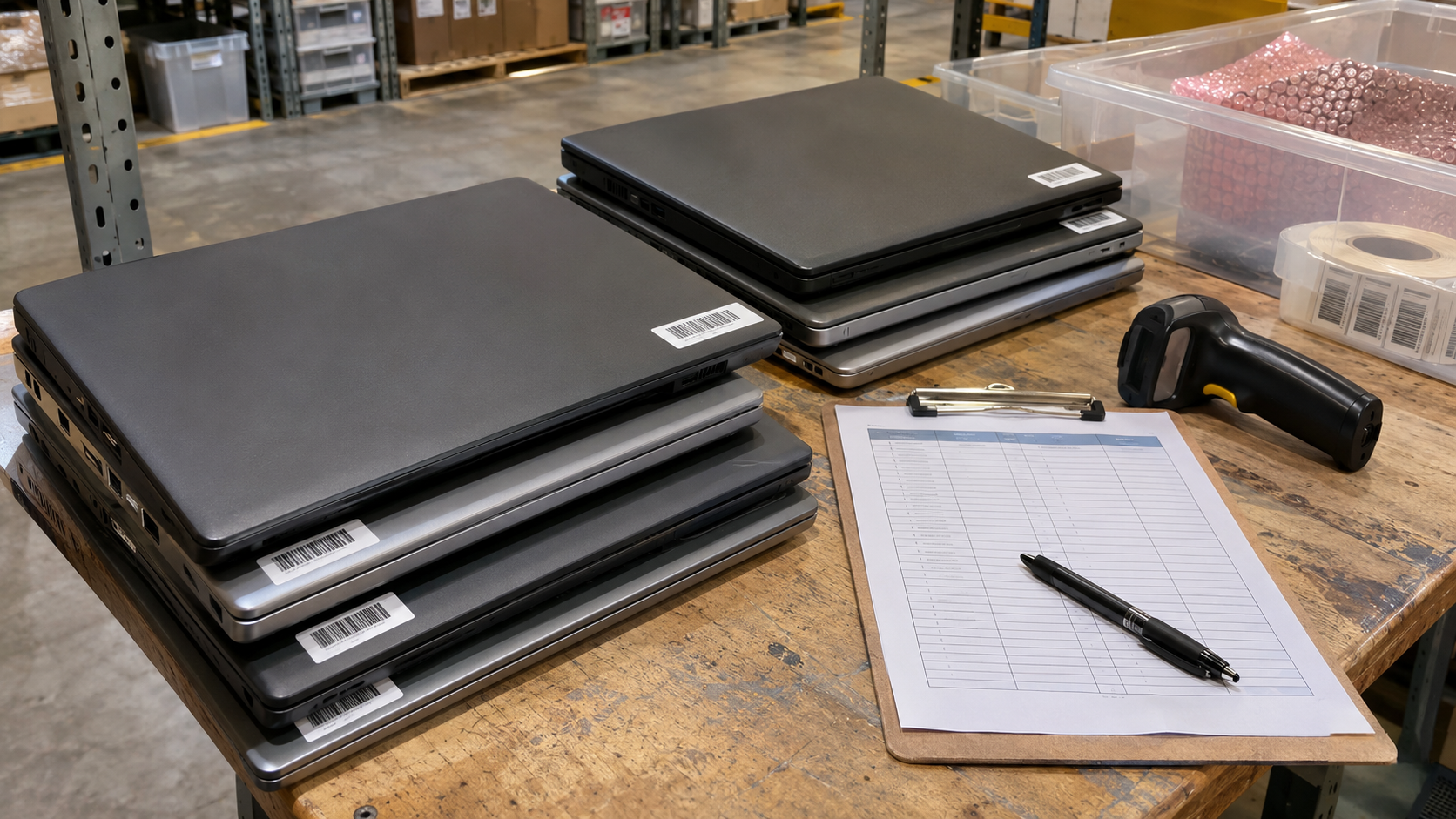
When retired laptops, servers and drives leave your building, you are still responsible for the data on them until it has been properly handled. An ITAD chain of custody is the documented trail that shows where each asset went, who had it and what happened to it. Without that trail, a certificate at the end of a project proves less than it appears to. This guide explains what an ITAD chain of custody includes and how to evaluate one.
What Is an ITAD Chain of Custody?
In IT asset disposition, chain of custody means a continuous record of each asset from the moment it leaves its last user to its final outcome: reuse, resale, data destruction or recycling. A good record answers four questions for every device:
- What is it? Make, model, serial number and asset tag.
- Where has it been? Each location and handoff.
- Who had it? The person or company responsible at each stage.
- What happened to it? The data handling method and final disposition.
Why ITAD Chain of Custody Matters
Sanitization Records Depend on Tracking
NIST SP 800-88 Revision 2 makes this point directly. It says the value of a certification of media disposition depends on how the organization handles media over its life cycle. NIST recommends keeping records when media is introduced, when it leaves the place where it was last used, and when it reaches its post-sanitization destination. If tracking breaks down before the final destination, NIST notes, the records only show that specific media were sanitized, not whether every device was.
Control Changes When Equipment Leaves
NIST also explains that control of media can change when it is returned from a lease, donated, resold or sent to a recycling facility. Media handed to a maintenance provider may remain under organizational control if contracts specifically protect confidentiality. Media exchanged and not returned is out of the organization’s control.
Laws May Treat Lost Devices as Breaches
NIST warns that some legal and regulatory requirements can treat the loss of control of unsanitized media as a data breach. A missing device with data on it is a security problem, not just an inventory gap.
Vendor Oversight Is Expected
The FTC’s Disposal Rule lists, as an example of reasonable measures, entering into and monitoring compliance with a contract with a record destruction company after due diligence. FTC Disposal Rule explains this in more detail. Data Destruction Policy shows where chain of custody fits in a written policy.
The Stages of an ITAD Chain of Custody
- Inventory before release. List each asset with serial number, asset tag and whether it stores data. This becomes the master list everything else is reconciled against.
- Secure staging. Keep retired equipment in a controlled area until pickup, especially devices with drives installed.
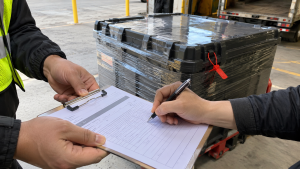
- Handoff at pickup. Count and record assets at the door, with signatures from both sides.
- Transport. Record who moved the equipment and when it arrived.
- Receiving and reconciliation. The provider checks in assets against your list and flags any differences.
- Data handling. Each data-bearing device or drive is wiped or destroyed, and the method is recorded against its serial number.
- Final disposition. Assets are resold, reused or recycled, and the outcome is recorded.
- Certificates and reports. You receive documentation that ties back to the original inventory.
Computer Recycling Pickup Checklist helps with the first three stages.
What Records Should an ITAD Chain of Custody Include?
| Record | Why it matters |
|---|---|
| Asset inventory with serial numbers | The baseline for reconciliation |
| Pickup or transfer form with signatures | Shows when responsibility changed hands |
| Receiving report | Confirms what arrived and flags gaps |
| Data sanitization record per device | Shows the method, tool and verification |
| Certificate of destruction or sanitization | Formal proof for each data-bearing asset |
| Final disposition report | Shows what was resold, reused or recycled |
NIST’s sample certificate of sanitization includes the manufacturer, model, serial number, media type, sanitization method and technique, tool and version, verification method, and the name, title, date, location, contact information and signature of the person who verified it. Certificate of Data Destruction explains what to look for.
Common Gaps in an ITAD Chain of Custody
- Counts instead of serial numbers. “40 laptops” cannot be reconciled device by device.
- Missing drives. Drives removed before pickup need their own records.
- Unrecorded handoffs. Equipment that passes through a third party without paperwork breaks the chain.
- Certificates without serials. A summary certificate cannot show which devices were covered.
- No reconciliation. Differences between what left and what arrived go unnoticed.
Questions to Ask an ITAD Provider About Chain of Custody
- How do you record assets at pickup, and who signs?
- Do you reconcile received assets against our inventory and report differences?
- How is each data-bearing device tracked to its sanitization record?
- Will certificates list serial numbers?
- What happens to equipment after data handling, and is that recorded?
- Which certifications do you hold? The EPA recommends using certified electronics recyclers. Certified Electronics Recycling explains the main standards.
How 3W Computer Can Help
3W Computer works with businesses retiring IT equipment from its base in Upland, California. On its website, 3W Computer lists logistics and pickup, detailed inventory reporting, equipment remarketing, data destruction services and a certificate of destruction. Contact 3W Computer to discuss how assets will be recorded from pickup through final reporting.
Frequently Asked Questions
What is chain of custody in ITAD?
It is the documented record of each retired asset from its last user to its final outcome, showing who had it, where it went and what happened to the data.
Why is chain of custody important?
Because sanitization certificates only prove what they cover. NIST notes that without tracking from start to finish, records cannot show whether every device was sanitized.
What is a chain of custody form?
It is a document recording a transfer of assets, usually listing items, serial numbers, the date and signatures from both parties.
Should certificates of destruction list serial numbers?
Yes, where possible. Serial numbers let you match each certificate to your original inventory.
Does chain of custody apply to drives removed from computers?
Yes. Loose drives are easy to lose and need their own entries in the record.
Build an ITAD Chain of Custody You Can Reconcile
A strong ITAD chain of custody starts with a serial-level inventory and ends with records that match it. Document each handoff, tie data handling to each device and reconcile the final reports.
To discuss ITAD chain of custody for your next project, contact 3W Computer.
Sources
- National Institute of Standards and Technology, SP 800-88 Rev. 2: Guidelines for Media Sanitization
- Electronic Code of Federal Regulations, 16 CFR Part 682: Disposal of Consumer Report Information and Records
- U.S. EPA, Certified Electronics Recyclers
Name: Win Win World Recycle LLC
Address: 1226 West 9th Street, Upland, CA 91786
Phone: 908-798-6789