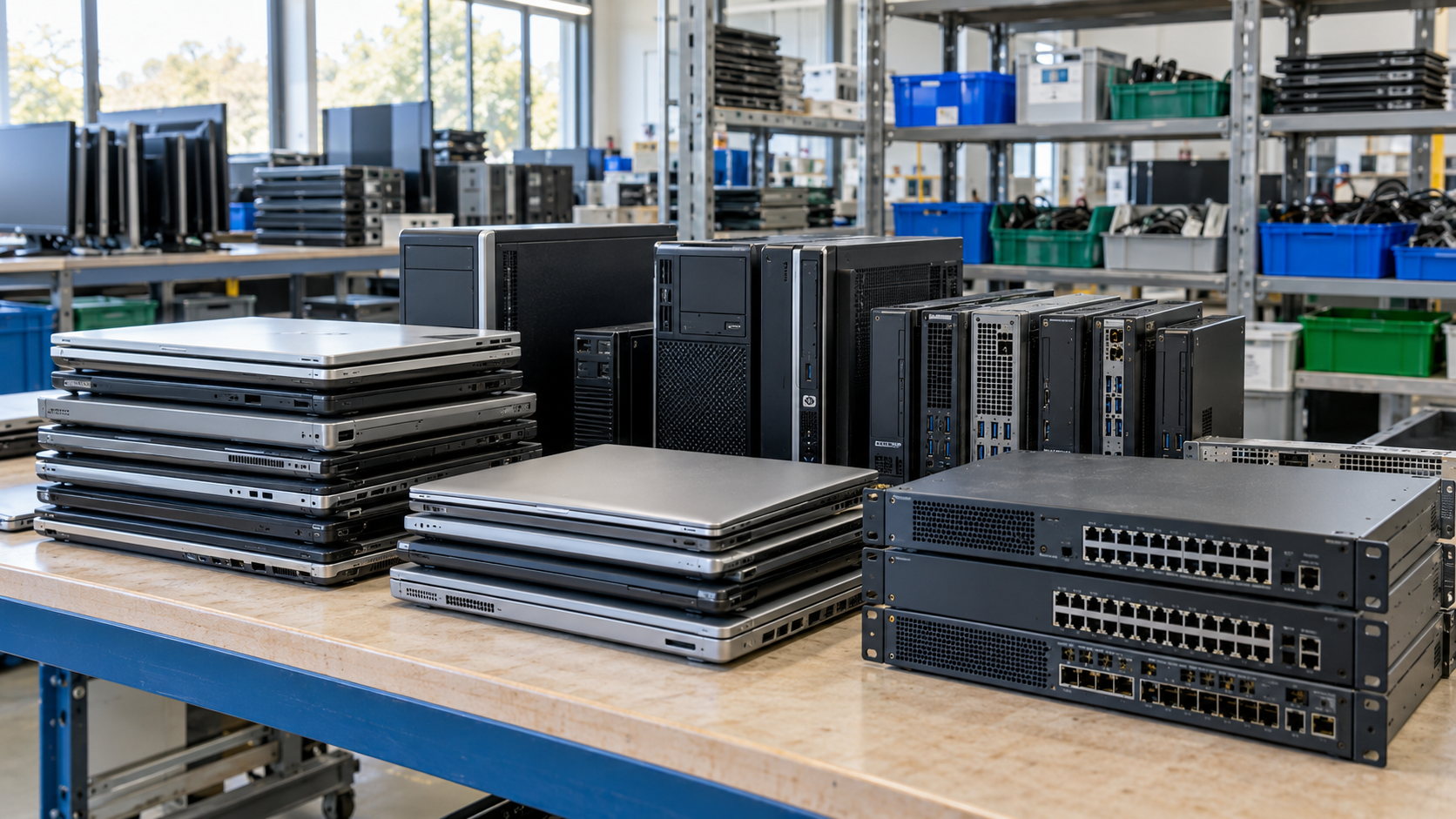
When a business hands over retired computers, servers and phones, it is trusting a recycler to protect data, handle hazardous components safely and send materials to responsible destinations. Certified electronics recycling gives that trust an outside check: an independent auditor has reviewed the recycler against a published standard. Understanding what certification covers, and what it does not, helps you choose a provider and ask the right questions.
What Is Certified Electronics Recycling?
Certified electronics recycling refers to recycling performed by a facility that has been audited and certified to a recognized standard for electronics recycling. According to the U.S. EPA, there are two accredited certification standards for electronics recyclers: the Responsible Recycling (R2) Standard and the e-Stewards standard. EPA states that certified recyclers have demonstrated through audits and other means that they continually meet specific high environmental standards.
EPA recommends using certified electronics recyclers, while noting that it does not endorse any particular recycler.
The R2 Standard
R2 is maintained by Sustainable Electronics Recycling International (SERI). According to SERI, the SERI Board of Directors adopted the current version, R2v3, in June 2020, and it is approved as an American National Standard by ANSI. SERI describes R2 as covering environmental, health and safety, quality and data security requirements in one package.
A practical point for businesses: SERI states that R2 certification covers the primary facility and its downstream vendors. Electronics often pass through several specialized processors, so downstream coverage matters.
The e-Stewards Standard
e-Stewards is run by the Basel Action Network. According to e-Stewards, the standard follows strict international waste trade rules, requires processors to destroy all residual data on equipment they receive, and combines third-party auditing with a performance verification program that checks conformance throughout the year.
Why Certified Electronics Recycling Matters for Businesses
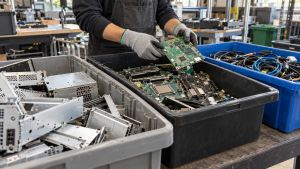
Choosing certified electronics recycling can help a business:
- Reduce data risk. Both standards include data security requirements.
- Rely on outside verification. Third-party audits add a check beyond the recycler’s own description.
- Understand downstream handling. Certification frameworks address where materials go after the first facility.
- Support internal policies. Some organizations require certified recyclers in procurement, security or sustainability policies.
Certification is not a substitute for your own requirements. You still need to define how data-bearing devices are handled and what records you need.
How to Verify a Recycler’s Certification
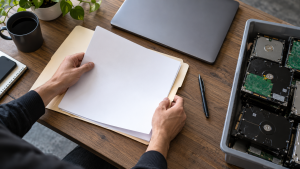
Certification claims are easy to make and worth checking:
- Ask which standard and which facility. Certification applies to specific facilities, not automatically to every location a company operates.
- Check the certification body’s directory. SERI provides an online search for R2 certified facilities on its website.
- Look at the status and scope. Confirm the certificate is current and covers the services you need.
- Be careful with “in progress” wording. A company working toward certification is not yet certified.
- Ask about subcontractors. If a provider uses partners for parts of the work, ask whether those partners are certified.
How to Choose an Electronics Recycling Company for Business includes more questions for verifying claims.
What Certification Does Not Replace
Even with certified electronics recycling, your organization should:
- keep its own inventory of what leaves the building
- agree in writing how drives will be sanitized or destroyed
- request certificates of data destruction tied to serial numbers where needed
- check that the provider accepts all of your equipment types
For data handling choices, see Data Wiping vs Hard Drive Shredding: A Business Guide.
How 3W Computer Approaches Certification
3W Computer’s compliance page states that the company is in an active audit phase for advanced electronics recycling standards, with a last status update in March 2026. 3W Computer does not present this as a completed certification. Businesses that require a certified recycler can contact 3W Computer to ask about current certification status, data destruction methods such as on-site shredding, and the documentation available for their project.
Frequently Asked Questions
What does certified electronics recycling mean?
It means the recycling facility has been audited and certified to a recognized standard. EPA identifies R2 and e-Stewards as the accredited standards for electronics recyclers.
Is R2 or e-Stewards better?
EPA does not endorse one standard over the other. Compare what each covers, check the facility’s certificate and scope, and choose based on your organization’s requirements.
Does certification guarantee data security?
No certification removes all risk. Both standards include data security requirements, but you should still agree on methods and request records for your devices.
How can I check whether a recycler is certified?
Ask for the certificate and facility name, then verify it with the certification body. SERI offers an online search for R2 certified facilities.
Is “certification in progress” the same as certified?
No. A recycler working toward certification has not completed it. Ask for the expected timeline and how they handle equipment in the meantime.
Ask the Right Questions About Certified Electronics Recycling
Certified electronics recycling adds independent verification to a process that involves data, hazardous materials and downstream partners. Verify the certificate, confirm the scope, and keep your own records, and certification becomes a useful tool rather than a label.
To discuss certification status and data handling for your next project, contact 3W Computer.
Sources
- U.S. EPA, Certified Electronics Recyclers
- Sustainable Electronics Recycling International, R2 Standard
- Basel Action Network, e-Stewards
Name: Win Win World Recycle LLC
Address: 1226 West 9th Street, Upland, CA 91786
Phone: 908-798-6789