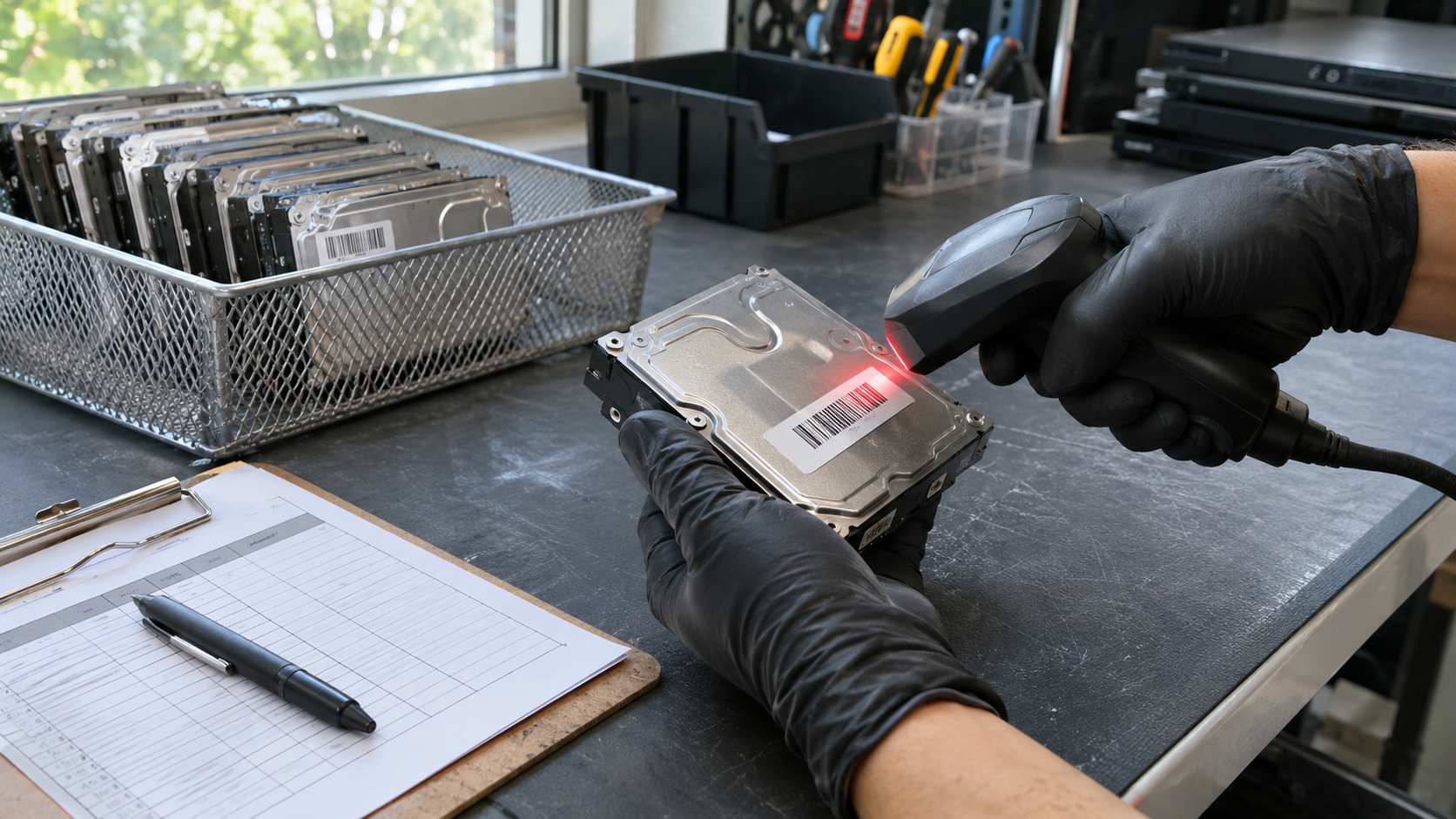
If your business pulls credit reports, runs background checks on job applicants or screens tenants, the FTC Disposal Rule likely applies to you. It sets a simple but important expectation: when you get rid of information that comes from a consumer report, you must do it in a way that protects people from fraud and identity theft. This guide explains the FTC Disposal Rule in plain English and what it means for old paper files, computers and drives.
This article is general information, not legal advice. Check with your legal or compliance advisor about how the Rule applies to your business.
What Is the FTC Disposal Rule?
The Disposal Rule is a federal regulation at 16 CFR Part 682. It implements section 216 of the Fair and Accurate Credit Transactions Act of 2003, which the regulation says is designed to reduce the risk of consumer fraud and related harms, including identity theft, created by improper disposal of consumer information.
According to the FTC, the Rule became effective on June 1, 2005, and the FTC enforces it.
What Is the FTC Disposal Rule Primarily Concerned With?
The Rule is concerned with consumer information: records about an individual that are a consumer report or are derived from one, in paper, electronic or other form. The regulation excludes information that does not identify individuals, such as aggregate information or blind data.
The FTC explains that consumer reports include credit reports and credit scores, as well as reports with information about employment background, check writing history, insurance claims, residential or tenant history, or medical history.
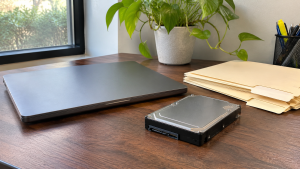
The Rule’s definition of “disposal” is broad. It covers discarding or abandoning consumer information, and also the sale, donation or transfer of any medium, including computer equipment, on which consumer information is stored. That means a retired laptop or server holding background check files falls within the Rule.
Who Must Comply With the FTC Disposal Rule?
The FTC says the Rule applies to any business or individual who uses a consumer report for a business purpose, regardless of size. Its examples include:
- consumer reporting companies
- lenders and insurers
- employers
- landlords
- government agencies
- mortgage brokers
- automobile dealers
- attorneys or private investigators
- debt collectors
- individuals who obtain a credit report on prospective nannies, contractors or tenants
- service providers that maintain consumer report information for organizations covered by the Rule
What Does “Proper Disposal” Mean?

The standard in the regulation is that covered persons must take reasonable measures to protect against unauthorized access to or use of the information in connection with its disposal. The FTC describes this standard as flexible, letting businesses decide what is reasonable based on the sensitivity of the information, the costs and benefits of different methods, and changes in technology.
The regulation gives examples of reasonable measures. They are illustrative, not exhaustive:
- Paper: policies requiring the burning, pulverizing or shredding of papers so the information cannot practicably be read or reconstructed.
- Electronic media: policies requiring the destruction or erasure of electronic media so the information cannot practicably be read or reconstructed.
- Disposal vendors: after due diligence, contracting with a company in the business of record destruction and monitoring its compliance.
- Service providers: policies that protect against unauthorized or unintentional disposal by those who handle consumer information for covered businesses.
- Financial institutions: incorporating proper disposal into the security program required by the GLBA Safeguards Rule.
Choosing a Disposal Vendor Under the Rule
The regulation lists examples of due diligence on a disposal company:
- reviewing an independent audit of its operations or its compliance with the Rule
- obtaining information about it from several references or other reliable sources
- requiring certification by a recognized trade association or similar third party
- reviewing its information security policies or procedures
- taking other appropriate measures to judge its competency and integrity
How to Choose an Electronics Recycling Company for Business covers practical questions to ask, and ITAD Chain of Custody explains how to track equipment once it leaves.
Applying the FTC Disposal Rule to Computers and Drives
For electronic media, the goal is that information cannot practicably be read or reconstructed. Deleting files is not enough: the FTC’s guide Protecting Personal Information warns that files deleted with keyboard or mouse commands may continue to exist on the hard drive and could be retrieved easily.
Practical steps:
- Find where consumer report data lives: HR systems, leasing files, shared drives, laptops, backups and copiers.
- Choose a method by media type. NIST’s SP 800-88 Revision 2 describes clear, purge and destroy. NIST 800-88 Explained summarizes it.
- Cover remote workers. The FTC says employees who work from home should follow the same procedures for disposing of sensitive documents, old computers and portable storage devices.
- Keep records, such as a certificate of data destruction tied to serial numbers.
How the Disposal Rule Relates to Other Laws
The regulation states that it does not require anyone to keep or destroy a record that other law does not require, and does not change other legal requirements to keep or destroy records. The FTC also encourages anyone disposing of records with consumers’ personal or financial information to take similar protective measures, even when the Disposal Rule does not strictly apply.
Financial institutions should also review the GLBA Safeguards Rule, which has its own disposal requirements.
How 3W Computer Can Help
3W Computer works with businesses retiring IT equipment from its base in Upland, California. On its website, 3W Computer lists physical hard drive shredding, software wiping meeting NIST 800-88 standards, on-site shredding options, a certificate of destruction, detailed inventory reporting, and logistics and pickup. Contact 3W Computer to discuss secure disposal of devices that may hold consumer report information.
Frequently Asked Questions
What is the FTC Disposal Rule?
It is the FTC regulation at 16 CFR Part 682 that requires anyone who uses consumer report information for a business purpose to dispose of it with reasonable measures against unauthorized access or use.
What is the FTC Disposal Rule primarily concerned with?
Preventing fraud and identity theft caused by improper disposal of information from consumer reports.
Does the Disposal Rule apply to small businesses?
Yes. The FTC says it applies to both large and small organizations that use consumer reports.
Does the Disposal Rule cover old computers?
Yes. Its definition of disposal includes the sale, donation or transfer of any medium, including computer equipment, that stores consumer information.
Does the Rule require a specific destruction method?
No. It sets a reasonableness standard and gives examples such as shredding paper and destroying or erasing electronic media.
Make the FTC Disposal Rule Part of Routine Disposal
The FTC Disposal Rule is flexible, but its core is clear: consumer report information must not be readable after you discard it. Find where that information lives, choose suitable methods, check your vendors and keep records.
To discuss secure disposal of retired equipment, contact 3W Computer.
Sources
- Electronic Code of Federal Regulations, 16 CFR Part 682: Disposal of Consumer Report Information and Records
- Federal Trade Commission, Disposing of Consumer Report Information? Rule Tells How
- Federal Trade Commission, Protecting Personal Information: A Guide for Business
- National Institute of Standards and Technology, SP 800-88 Rev. 2: Guidelines for Media Sanitization
Name: Win Win World Recycle LLC
Address: 1226 West 9th Street, Upland, CA 91786
Phone: 908-798-6789