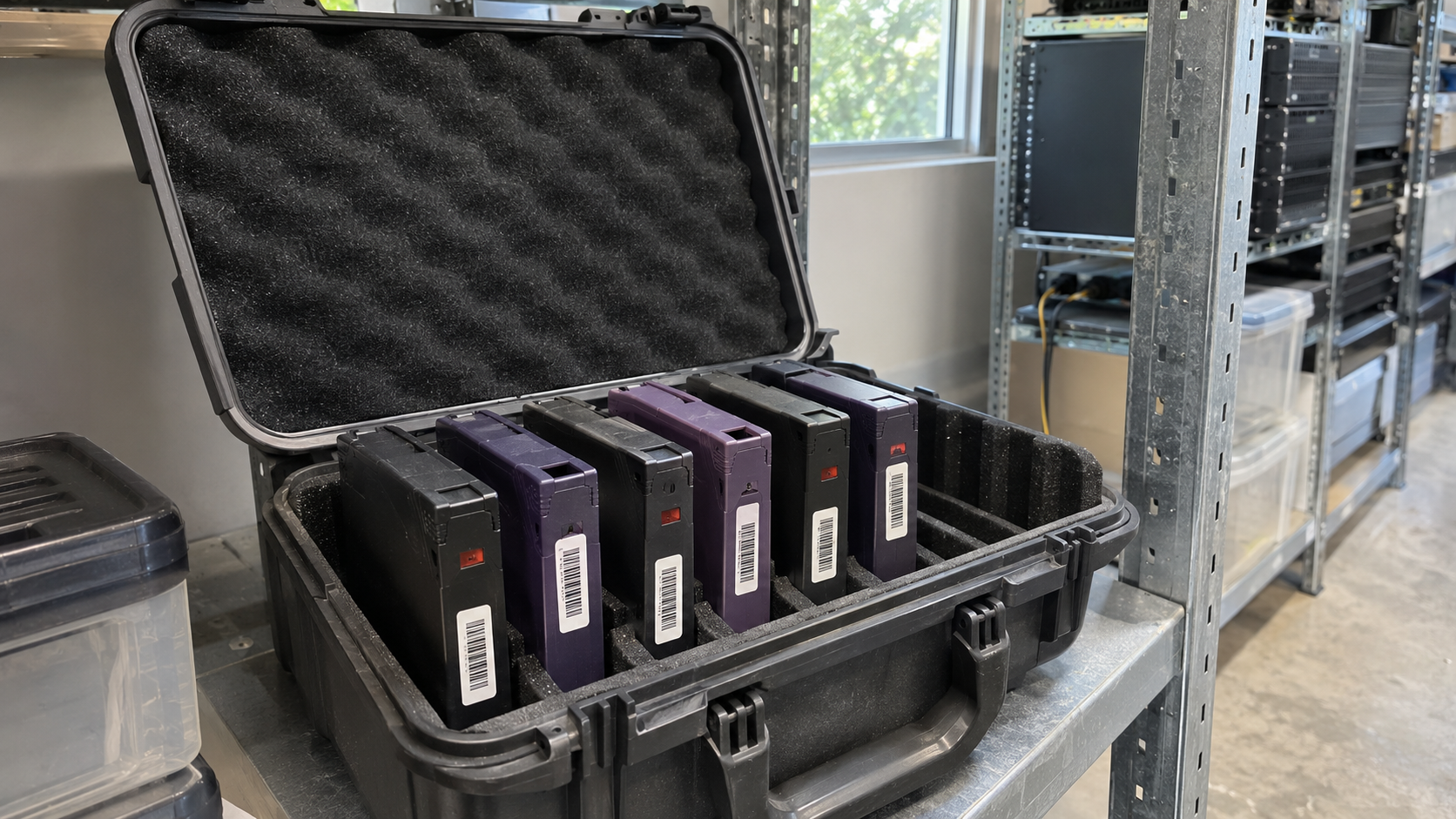
Many organizations still have boxes of backup tapes in storage rooms, offsite vaults or old server closets. They may be years old and unreadable by any drive you still own, but that does not mean the data on them is gone. Backup tapes often hold complete copies of systems, email and customer records. Backup tape destruction is the process of making that data unrecoverable when the tapes are no longer needed. This guide explains how to approach it.
Why Backup Tapes Need Secure Disposal
They Often Hold Full Copies of Your Data
A backup tape is designed to capture large amounts of data at once. One tape can contain far more sensitive information than a single laptop, which makes a lost or discarded tape a serious risk.
Old Tapes Are Easy to Lose Track Of
Tapes are often moved offsite, rotated, relabeled and forgotten. The FTC’s guide Protecting Personal Information advises businesses to inventory computers, disks and other equipment to find out where sensitive data is stored. Tapes belong in that inventory.
Tape Is Recognized Media Under NIST Guidance
NIST SP 800-88 Revision 2 lists magnetic tape among the types of information storage media that need sanitization. NIST also warns that some legal or regulatory requirements can treat the loss of control of unsanitized media as a data breach.
Backup Tape Destruction Methods Compared
NIST describes three sanitization methods: clear, purge and destroy. Here is how they apply to tapes.
Overwriting
Overwriting a tape with new data is a logical technique. It requires a working drive that supports the tape format and can take a long time for large collections. It also does not work on damaged tapes. NIST notes that overwriting cannot be used on media damaged to the point of being inoperable.
Degaussing
NIST says physical purge techniques historically included degaussing for magnetic tapes, magnetic removable disks and magnetic hard disk drives. A degausser uses a strong magnetic field to disrupt the magnetic data.
NIST adds important cautions:
- Degaussing has become more complicated as media have evolved.
- A degausser must be strong enough for the media it is used on.
- At the time of writing, degaussing is not considered an approved destroy technique, and NIST points readers to IEEE 2883 and NSA/CSS Policy Manual 9-12 for clarification.
The NSA’s Media Destruction Guidance page publishes Evaluated Products Lists for sanitization equipment. Organizations that rely on degaussing can ask whether a provider’s equipment appears on an applicable list. Hard Drive Degaussing explains degaussing in more depth.
Physical Destruction
NIST lists disintegration, incineration, melting, pulverizing and shredding as destructive techniques. It notes that media is not considered destroyed unless data recovery is infeasible using state-of-the-art laboratory techniques, and that partial damage can leave portions accessible. NIST also says destruction may be the only option when media fails or is obsolete, which is common with old tape formats.
How to Plan a Backup Tape Destruction Project
- Find every tape. Check server rooms, storage closets, offsite vaults and former employees’ desks.
- Check retention requirements. Confirm with legal or records staff that the tapes are no longer needed and are not subject to a hold.
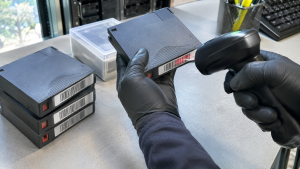
- Inventory the tapes. Record format, labels or barcodes, and quantity. Barcodes make tracking easier.
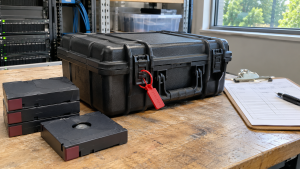
- Choose the method. Decide between degaussing, destruction or both, based on data sensitivity and policy. A written data destruction policy helps.
- Control the handoff. Keep tapes in sealed, labeled containers and record who receives them.
- Get documentation. NIST’s sample certificate of sanitization records details such as the media type, method, technique, tool and verification. A certificate of data destruction serves this purpose.
Questions to Ask a Backup Tape Destruction Provider
- Which tape formats do you accept?
- Do you degauss, destroy or both?
- If you degauss, what equipment do you use and is it rated for our tape types?
- How are tapes tracked from pickup to destruction?
- Will the certificate list quantities, barcodes or serial numbers?
- What happens to the remaining materials after destruction?
How 3W Computer Can Help
3W Computer works with businesses retiring IT equipment from its base in Upland, California. On its website, 3W Computer lists data destruction services including physical hard drive shredding, on-site shredding options and a certificate of destruction, along with logistics and pickup. Its website does not specifically mention backup tapes, so contact 3W Computer with your tape formats and quantities to confirm whether and how they can be handled.
Frequently Asked Questions
How do you destroy old backup tapes?
Inventory them, confirm they are no longer needed, then degauss or physically destroy them with suitable equipment and keep documentation.
Is degaussing enough for backup tapes?
It can be an effective purge technique when the degausser is strong enough for the tape. NIST notes it is not considered an approved destroy technique and refers readers to IEEE 2883 and NSA guidance.
Can old tapes skip backup tape destruction if no drive can read them?
No. The data may still be recoverable with the right equipment, so tapes should be securely sanitized or destroyed.
Should backup tapes be shredded?
Shredding is one of the destructive techniques NIST lists. Ask the provider how the process makes recovery infeasible.
What records should we keep after backup tape destruction?
Keep the tape inventory, transfer records and a certificate showing the method used and the tapes covered.
Make Backup Tape Destruction Part of Your Retention Plan
Old tapes are easy to forget and hold a lot of data. Find them, confirm they can be disposed of, choose a suitable method and keep records. Backup tape destruction done well closes one of the quieter data risks in many organizations.
To discuss your retired media, contact 3W Computer.
Sources
- National Institute of Standards and Technology, SP 800-88 Rev. 2: Guidelines for Media Sanitization
- National Security Agency, Media Destruction Guidance
- Federal Trade Commission, Protecting Personal Information: A Guide for Business
Name: Win Win World Recycle LLC
Address: 1226 West 9th Street, Upland, CA 91786
Phone: 908-798-6789