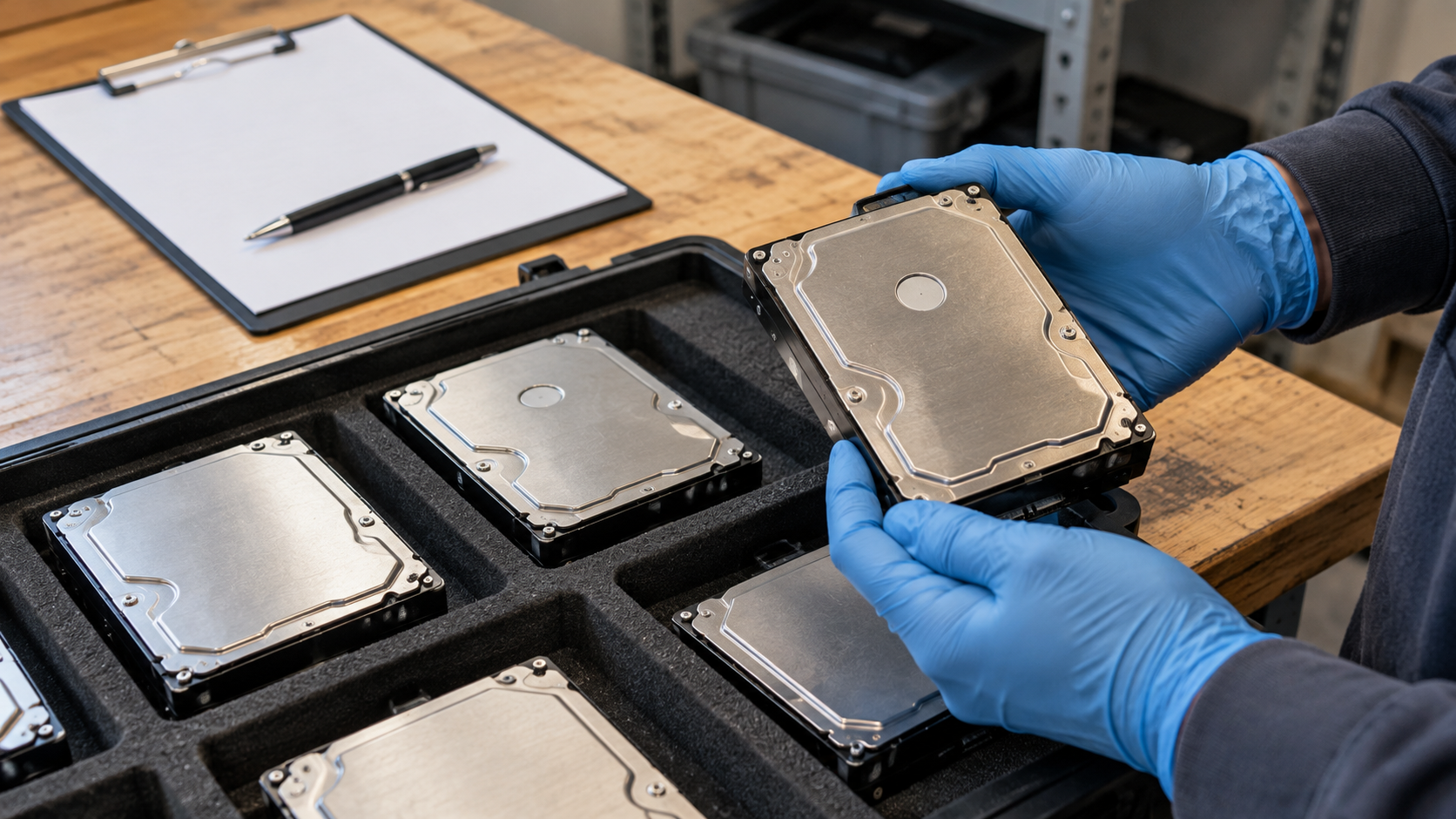
When a business retires hard drives that held sensitive information, it needs a method that makes the data unrecoverable. Hard drive degaussing is one of the methods people ask about most, often alongside shredding and software wiping. It can be effective on the right kind of media, but it has limits that matter for modern equipment. This guide explains how degaussing works, where it falls short, and how to decide which method fits your drives.
What Is Hard Drive Degaussing?
Traditional hard disk drives (HDDs) store data magnetically on spinning platters. Degaussing uses a strong magnetic field to disrupt that stored magnetism. NIST’s glossary, citing SP 800-88 Revision 2, defines degauss as reducing the magnetic flux to virtual zero by applying a reverse magnetizing field matched to the coercivity of the storage media.
In plain terms, hard drive degaussing scrambles the magnetic patterns that represent data. It is done with a machine called a degausser, which is designed for the type of media being processed.
Does Degaussing Destroy a Hard Drive?
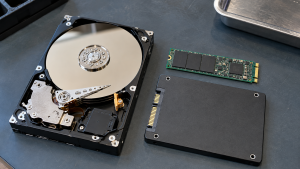
Degaussing targets the data, not the physical shape of the drive. The drive may look unchanged afterwards, which creates a practical risk: a degaussed drive can be mistaken for a working one.
The National Security Agency addresses this in its media destruction FAQs. For drives under its policy, NSA says physically destroying a hard drive after degaussing is an additional level of security that helps ensure the drive is not mistaken for a working drive, and that deforming does not replace degaussing. NSA’s guidance is written for classified information, so most businesses will not follow it to the letter, but the point about visible destruction applies widely.
Can You Reuse a Hard Drive After Degaussing?
Plan on no. Degaussing is a sanitization method for drives that are leaving service, not a way to prepare a drive for reuse. If your goal is to reuse or resell drives, software-based sanitization is usually the route to discuss. How to Wipe a Computer Before Recycling explains the basics.
Does Hard Drive Degaussing Work on SSDs?
No. SSDs and other flash storage hold data electronically in memory chips rather than as magnetic patterns on platters, so a magnetic field is not a suitable way to sanitize them. Reflecting this difference, NSA publishes separate evaluated products lists for magnetic degaussers and for solid state disintegrators.
This matters because many business laptops and servers now use SSDs, and some laptops have storage built onto the main board. Before choosing hard drive degaussing for a batch of equipment, confirm what media you actually have. SSD Data Destruction covers the options for flash storage.
Newer High-Density Hard Drives
Hard drive technology keeps changing. NSA’s FAQs note that hard disk drives made after 2020 may be heat-assisted magnetic recording (HAMR) drives, and that effectively sanitizing these drives demands a considerably stronger degausser than traditional drives. For HAMR and MAMR drives, NSA’s FAQ states that incineration is currently the only method it identifies for its purposes.
If you have recent high-capacity drives, ask any provider how they identify and handle them.
Degaussing vs Shredding vs Wiping
| Degaussing | Shredding | Software wiping | |
|---|---|---|---|
| Works on HDDs | Yes, with a suitable degausser | Yes | Yes |
| Works on SSDs | No | Yes, with suitable equipment | Yes, with suitable methods |
| Drive reusable afterwards | No | No | Often yes |
| Visible proof of destruction | No | Yes | No |
| Best fit | Magnetic media leaving service | Drives that must be destroyed | Equipment intended for reuse |
Many organizations combine methods, for example wiping drives that will be reused and shredding drives that failed or held highly sensitive information. Data Wiping vs Hard Drive Shredding and Hard Drive Shredding Service go deeper on those two options.
Questions to Ask a Hard Drive Degaussing Provider
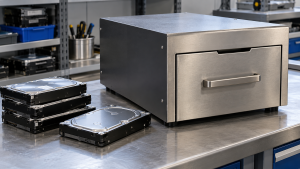
- Which media types does your process cover, and how do you handle SSDs?
- Is the degausser rated for the drives we have, including newer high-capacity drives?
- How do you verify the degausser is working as intended?
- Are drives physically destroyed after degaussing?
- Will we receive a record tied to drive serial numbers, such as a certificate of data destruction?
How 3W Computer Handles Data-Bearing Drives
3W Computer works with businesses retiring IT equipment from its base in Upland, California. For data destruction, its website lists physical hard drive shredding, on-site shredding options, software wiping and a certificate of destruction. Contact 3W Computer to discuss which method fits your drives and documentation needs.
Frequently Asked Questions
What is hard drive degaussing?
It is a method of sanitizing magnetic storage by exposing it to a strong magnetic field that disrupts the stored data patterns.
Does degaussing destroy a hard drive?
It targets the data, and the drive should be treated as no longer usable. Because the drive can look unchanged, many organizations also physically destroy degaussed drives.
Can you degauss an SSD?
No. SSDs store data electronically rather than magnetically, so degaussing is not a suitable sanitization method for them.
Is degaussing better than shredding?
Neither is better for every case. Shredding gives visible proof of destruction and works on more media types. Degaussing applies to magnetic media only. Choose based on your media and requirements.
Can I degauss a hard drive with a magnet?
Ordinary magnets are not a reliable way to sanitize a hard drive. Use a method designed and verified for the media, or work with a provider.
Choose Hard Drive Degaussing With Clear Expectations
Hard drive degaussing can sanitize magnetic drives, but it does not work on SSDs, it leaves drives unusable, and it leaves no visible proof by itself. Confirm your media, match the method to your requirements, and ask for records that tie each drive to its outcome.
To discuss the best data destruction method for your retired drives, contact 3W Computer.
Sources
- National Institute of Standards and Technology, SP 800-88 Rev. 2: Guidelines for Media Sanitization
- NIST Computer Security Resource Center, Glossary: degauss
- National Security Agency, Media Destruction Guidance FAQs
Name: Win Win World Recycle LLC
Address: 1226 West 9th Street, Upland, CA 91786
Phone: 908-798-6789