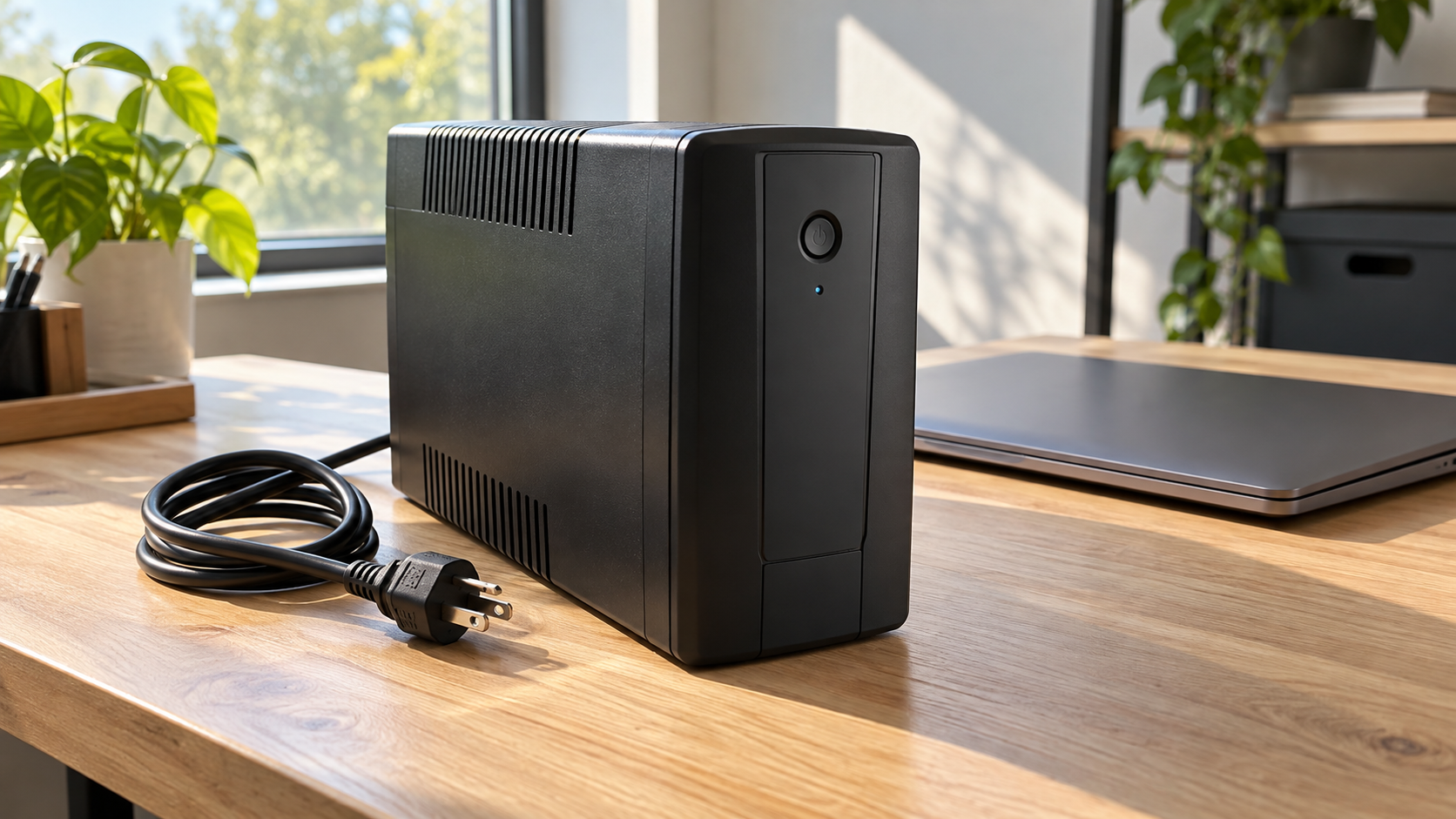
UPS Battery Recycling: Where to Take Old Battery Backups
An old battery backup is different from a box of computer cables. It contains a battery, and the right recycling destination depends on the battery type, equipment condition and whether you are retiring the battery alone or the entire unit.
For UPS battery recycling, start with the manufacturer’s current recycling guidance, a battery recycler that accepts the specific battery chemistry, or an electronics program that explicitly accepts complete UPS units. Confirm acceptance before visiting or arranging collection.
A UPS, or uninterruptible power supply, may still be useful when its battery reaches the end of its service life. Before discarding the whole device, check whether an approved battery replacement is appropriate. For office equipment, have IT or facilities make that decision before a cleanout team disconnects anything.
Recycle the Battery or the Entire UPS?
These are two separate decisions. A battery replacement may allow suitable equipment to remain in service, while a damaged, unsupported or unsuitable UPS may need to be retired as a complete unit.
Do not diagnose the problem solely from a warning light or reduced runtime. Check the model’s documentation and use the manufacturer’s support process when the cause is unclear. A battery warning does not establish that every other part of the UPS is in good condition.
| Situation | Next step |
|---|---|
| The UPS remains suitable and an approved battery replacement is available | Have the appropriate person assess replacement and arrange recycling of the spent battery |
| The unit no longer fits the equipment or support requirements | Assess retirement of the complete UPS |
| The device or battery shows damage or an abnormal condition | Stop routine handling and seek specific instructions |
| The model, battery chemistry or ownership is unclear | Identify it before arranging disposal or shipment |
Recycling acceptance may differ for a complete unit and a loose battery cartridge. Explain exactly what you have when asking for a destination.
Identify the Battery Type Before Choosing a Recycler
Do not select a recycling route from the UPS enclosure’s appearance alone. Use the model documentation, battery specifications or information from the manufacturer. Avoid opening a unit simply to identify its battery if that is not an authorized user procedure.
The EPA’s household battery guidance identifies small sealed lead-acid batteries as a type used in computer UPS equipment. Other products can use different battery chemistries, so verify your actual model rather than assuming all UPS batteries are the same.
When requesting acceptance, provide the UPS model and the battery part number if available. If a battery has already been removed through an approved process, preserve its identifying information for the receiver.
For a mixed business inventory, record unknown battery types as unknown. A clear photo of an accessible label or a model list is more useful than an unsupported guess.
Where Can You Recycle UPS Batteries in the US?
There are several possible starting points, but each requires confirmation for your equipment and customer type.
Manufacturer recycling guidance
Look for current instructions covering the exact product and your region. Some manufacturer programs distinguish battery replacements from complete equipment returns and may set conditions for eligibility or packaging.
Use the manufacturer’s official website or support team to confirm the process. Do not assume an old return label, forum post or instruction sheet still describes the available program.
Battery recycling programs
Ask whether the program accepts the battery chemistry, size and quantity you have. A collection box for small consumer batteries is not automatic approval for a UPS battery cartridge.
Describe whether the battery is intact, still installed or already removed. Any damage or abnormal condition should be disclosed before you transport it.
Local household collection programs
For household equipment, check city or county solid-waste and household hazardous-waste information. Ask specifically about UPS batteries or complete battery backup units, appointments and residency requirements.
A household program may not accept business-generated material. An office should identify itself as a business and describe the load before relying on a public collection event.
Electronics recyclers
Some electronics programs accept complete battery backups, but acceptance of computers does not establish acceptance of UPS equipment or loose batteries. Ask about both the equipment and its battery before arranging a handoff.
Businesses considering 3W Computer can send a model list, approximate quantities, equipment condition and location to discuss acceptance and available arrangements. Confirm the scope before bringing or shipping equipment.
Can a UPS Battery Go in the Trash or Recycling Bin?
Do not place a UPS battery in ordinary household trash or a municipal recycling bin. The EPA advises dedicated collection routes for rechargeable batteries and specifically directs lead-acid batteries away from these bins.
A recycling symbol on an item does not establish that your curbside program accepts it. Find a program that handles the actual battery or battery-containing device.
The EPA’s lithium-ion guidance also states that lithium-ion batteries and devices containing them do not belong in household garbage or municipal recycling bins. If your UPS uses this chemistry, identify it when asking for instructions.
Do not drain a battery, break its casing or try to recover materials yourself. Leave treatment and material recovery to an appropriate receiving process.
Should You Remove the Battery Yourself?
Only follow removal or replacement procedures that the manufacturer identifies as appropriate for the user, and only when you are able to meet the instructions. Some equipment requires qualified service personnel.
Unplugging a UPS is not proof that every part is free of electrical energy. Do not open an enclosure or disconnect internal components based on a generic recycling checklist.
If removal is not an approved user task, ask whether the receiver accepts the complete unit or whether qualified service is needed first. For rack-mounted equipment and larger battery systems, coordinate with facilities and the responsible service provider.
Keep a spent battery separate from an unverified replacement. Do not mix batteries into a box of adapters or cables, and do not substitute a different chemistry or part because it appears to fit.
The goal is an appropriate handoff, not maximum dismantling before collection.
How to Prepare an Old Battery Backup for Collection
Start by obtaining the receiver’s instructions. Preparation can differ for complete units, removable cartridges and different battery types.
- Confirm the equipment is ready for retirement. Identify what it supports and coordinate a change before disconnecting an active system.
- Check ownership and approval. Separate leased or service-provider equipment from company-owned assets.
- Identify the unit. Record the model, quantity and battery information available without unsafe access.
- Describe condition honestly. Tell the receiver about damage, leakage, swelling or other abnormal conditions before moving the equipment.
- Follow the agreed preparation plan. Confirm whether batteries should remain installed and what containers or protective measures are required.
- Plan the handoff. Check appointments, loading access, weight considerations and any charges.
Do not improvise a shipping package from an ordinary electronics box. Collection approval does not automatically authorize mailing, and a package suitable for a complete device may not be suitable for a loose battery.
For abnormal equipment, seek specific guidance rather than continuing through a routine packing process. Do not force a swollen battery out of its housing or attempt to repair a leaking one.
Business UPS Recycling: Build a Useful Inventory
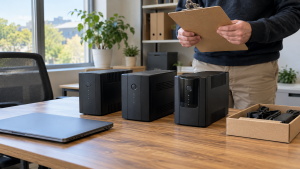
An office may have battery backups beneath desks, in network closets and beside shared equipment. Assign one person to coordinate the inventory so units are not overlooked or removed before IT approves retirement.
Record the following where available:
- Equipment model, asset identifier and quantity.
- Battery type or a clear indication that it remains unverified.
- Complete unit versus separate battery cartridge.
- Visible condition and any known fault.
- Ownership and retirement approval.
- Location, access restrictions and estimated handling requirements.
- Required acknowledgment or other documentation.
Keep units awaiting review separate from equipment approved for collection. Avoid stacking heavy battery backups in a way that could damage housings or create a lifting problem.
If a managed UPS includes a network management component, ask IT to review its configuration and account associations before release. Do not assume that every battery backup is a simple device with no information to assess.
A useful inquiry describes both the load and the work site. Three small units at a loading area present a different collection task from equipment distributed across several floors.
Is UPS Battery Recycling Free?
There is no universal fee or free-collection rule. Eligibility can depend on the receiving program, battery type, quantity, condition and whether you need transportation or additional handling.
A battery replacement program may offer a return arrangement under specific terms. Check current eligibility rather than assuming that every spent battery or complete UPS qualifies.
For business quantities, ask whether the quote covers pickup, loading labor, batteries, complete units and requested documentation. Identify unusual or damaged items before accepting a quote so the proposed scope reflects the actual equipment.
Do not assume a recovery payment is available. Likewise, a no-charge household drop-off offer should not be treated as a price for a commercial collection.
Get the agreed scope and charges in writing before scheduling the handoff.
Frequently Asked Questions
Where can I recycle an old UPS battery?
Start with the manufacturer’s recycling guidance, an appropriate battery recycler or a local collection program. Confirm acceptance of your battery chemistry, condition and quantity before visiting.
Can I recycle the entire battery backup?
Some electronics programs accept complete UPS units. Confirm this directly and ask whether the battery should remain installed. Do not assume a program accepting loose batteries also accepts the whole device.
Are all UPS batteries lead-acid?
No. Check the model specifications or manufacturer guidance to identify the battery type. Appearance alone is not a reliable basis for choosing a recycling route.
Should I replace the battery instead of recycling the UPS?
A replacement may be appropriate if the unit remains suitable and the manufacturer supports the procedure and replacement part. Have the appropriate person assess the equipment rather than assuming a battery change will resolve every fault.
Can I ship a used UPS battery for recycling?
Only after confirming an authorized receiving arrangement, carrier acceptance and applicable packaging instructions. Do not reuse generic shipping advice for a different battery type or condition.
What if a UPS battery is swollen or leaking?
Do not force removal, open the battery or pack it as routine equipment. Seek specific instructions from the manufacturer or an appropriate local collection authority before further handling or transport.
Confirm the Destination Before Moving the Equipment
UPS battery recycling begins with identifying what you have: a spent battery, a complete battery backup or equipment requiring special review. Check whether replacement is appropriate, verify the battery type and confirm the receiving program’s instructions.
For a business cleanout, contact 3W Computer with your UPS inventory, condition details and location to discuss acceptance and available arrangements. Confirm preparation, collection eligibility and costs before the equipment leaves your site.
Name: Win Win World Recycle LLC
Address: 1226 West 9th Street, Upland, CA 91786
Phone: 908-798-6789