For years, used electronics have crossed borders in large volumes, sometimes ending up in countries without the facilities to handle them safely. The Basel Convention is the main international treaty that controls those shipments, and in 2025 its rules for e-waste changed significantly. This guide explains the Basel Convention e-waste amendments, how they affect the United States, and what businesses should ask about where their retired electronics go.
What Is the Basel Convention?
According to the U.S. EPA, the Basel Convention on the Control of Transboundary Movements of Hazardous Wastes and their Disposal is a multilateral agreement negotiated under the United Nations Environment Program beginning in 1988. Its negotiators wanted to promote environmentally sound management of exported and imported waste, especially in developing countries.
The EPA explains that the Convention requires the exporting country to notify the receiving country and any transit countries of a proposed shipment, and that the shipment may occur only after those countries consent. An international movement document must accompany the waste until its recycling or disposal.
Is the United States Part of the Basel Convention?
No. The EPA states that the United States is a signatory to the Basel Convention but has not yet become a Party. As of August 2024, 190 countries and the European Commission are Parties.
That matters because, as the EPA explains, the Convention prohibits movements of controlled waste between Parties and non-Parties unless they occur under a separate agreement that meets Basel criteria.
What Changed for E-Waste in 2025?
The Basel Convention Secretariat explains that the fifteenth meeting of the Conference of the Parties, held in June 2022, adopted amendments to Annexes II, VIII and IX to enlarge control of e-waste shipments and make all electrical and electronic waste subject to the prior informed consent (PIC) procedure.
The changes include:
- New entry Y49 (Annex II): covers all e-waste, its components and wastes from processing e-waste, such as fractions from shredding, except those covered by A1181.
- New entry A1181 (Annex VIII): covers hazardous e-waste, its components and processing wastes, replacing the earlier entry A1180.
- Removed entries (Annex IX): B1110 (e-wastes) and B4030 (single-use cameras) were deleted.
The Secretariat states that the new entries became effective on January 1, 2025.
The EPA summarizes the effect: since January 1, 2025, international shipments of e-waste and scrap for recovery or disposal are allowed only with the prior written consent of the importing country and any transit countries. The EPA notes this is the first time non-hazardous e-waste and scrap is controlled under the Convention. Previously, only hazardous e-waste was controlled.
What the Basel Convention E-Waste Rules Cover
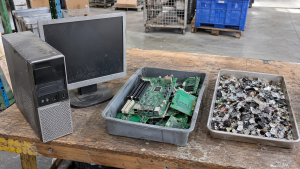
The EPA explains that the amendments create listings for hazardous and non-hazardous e-waste and scrap, each covering three categories:
- Whole equipment.
- Components, such as circuit boards and display devices, unless covered by another Basel listing.
- Fractions from processing, such as shredding or dismantling, unless covered by another Basel listing.
What It Means for U.S. Exports
Because the United States is not a Party, the EPA says the new amendments will have significant impacts on U.S. exports and imports of e-waste and scrap, since many U.S. trading partners will implement the Basel requirements.
The EPA also explains:
- The United States has an agreement with members of the Organization for Economic Cooperation and Development (OECD) covering hazardous and non-hazardous e-waste and scrap, but uncertainty remains about what requirements OECD countries will impose.
- U.S. exports of non-hazardous e-waste are not subject to export requirements under RCRA, the U.S. waste management law, but they are subject to the laws of the countries that control the waste and to applicable international agreements.
- The United States anticipates that most countries will apply prior informed consent requirements.
Why E-Waste Exports Matter
The EPA has raised concerns about unsafe handling of e-waste in developing countries, including open-air burning and acid baths used to recover valuable materials, which can expose workers to contaminants such as lead, mercury, cadmium and arsenic, according to its page on cleaning up electronic waste.
The UN’s Global E-waste Monitor 2024 reports that only 22.3% of e-waste generated worldwide in 2022 was documented as properly collected and recycled. E-Waste Statistics covers more of those figures.
What Businesses Should Ask Their Recycler
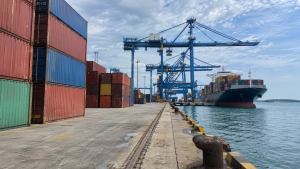
Most businesses never ship e-waste overseas themselves, but their recyclers’ downstream partners might. Useful questions include:
- Where are our materials processed after collection?
- Are any materials exported, and if so, to which countries?
- How do you comply with export rules, including Basel prior informed consent where it applies?
- Which certifications do you hold? The EPA recommends certified electronics recyclers. Certified Electronics Recycling explains the main standards.
- What documentation will we receive?
How 3W Computer Can Help
3W Computer works with businesses from its base in Upland, California. On its website, 3W Computer lists e-waste recycling with a zero landfill contribution policy, compliance with California regulations, detailed inventory reporting, and logistics and pickup. Contact 3W Computer to ask how your retired electronics are handled after collection.
Frequently Asked Questions
Does the Basel Convention include e-waste?
Yes. Since January 1, 2025, both hazardous and non-hazardous e-waste and scrap are subject to Basel Convention controls.
What are the Basel Convention e-waste amendments?
They are changes to Annexes II, VIII and IX, adopted in June 2022, that subject all e-waste shipments to the prior informed consent procedure. They took effect on January 1, 2025.
Is the United States a party to the Basel Convention?
No. The EPA says the United States is a signatory but has not become a Party.
Why is e-waste exported to developing countries?
The Basel Convention was negotiated with that concern in mind: the EPA says its negotiators wanted to promote environmentally sound management of exported waste, especially in developing countries. The EPA has also raised concerns that unsafe processing in some countries harms workers and the environment.
Do the amendments cover circuit boards?
Yes. The EPA lists components such as circuit boards and display devices among the categories covered, unless another Basel listing applies.
Basel Convention E-Waste Rules Make Downstream Questions More Important
The Basel Convention e-waste amendments brought all e-waste under international shipment controls from 2025. For U.S. businesses, the practical lesson is to know where retired electronics go after collection and to work with recyclers that can explain their downstream handling.
To discuss responsible recycling of your retired electronics, contact 3W Computer.
Sources
- Basel Convention Secretariat, Basel Convention E-waste Amendments
- U.S. EPA, New International Requirements for Electrical and Electronic Waste
- U.S. EPA, International Agreements on Transboundary Shipments of Hazardous Waste
- U.S. EPA, Cleaning Up Electronic Waste (E-Waste)
- ITU and UNITAR, The Global E-waste Monitor 2024
Name: Win Win World Recycle LLC
Address: 1226 West 9th Street, Upland, CA 91786
Phone: 908-798-6789